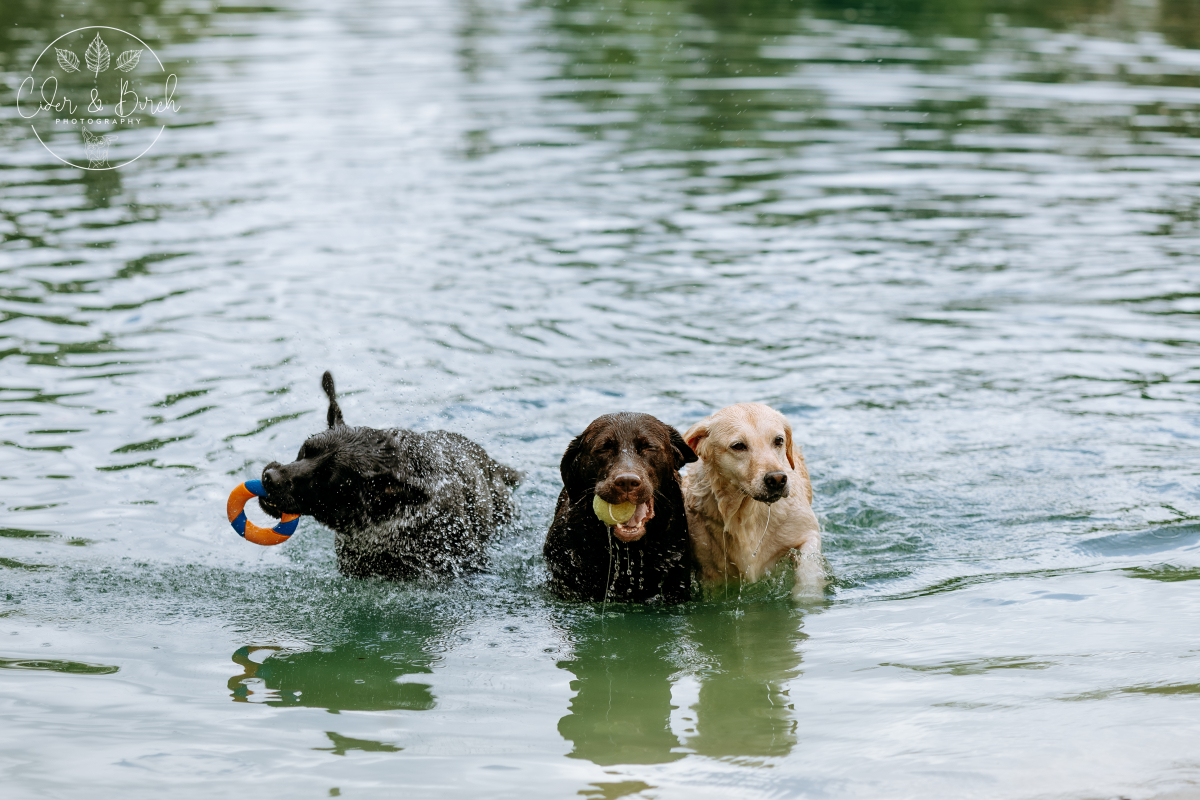
and it’s important to introduce them to the water the right way to make sure they’re safe, confident, and having a tail-wagging good time.
Here’s our step-by-step guide to helping your dog become a happy swimmer!
1. Start Slow and Stay Positive
Not every dog will dive right in—and that’s okay! Just like people, dogs need time to get used to new experiences.
Tips:
-
Let them explore the edge of the water at their own pace.
-
Use a calm, cheerful voice to encourage them.
-
Never force or push your dog into the water. That can create fear and set back progress.
AKC: How to Teach Your Dog to Swim
2. Choose a Safe, Calm Spot
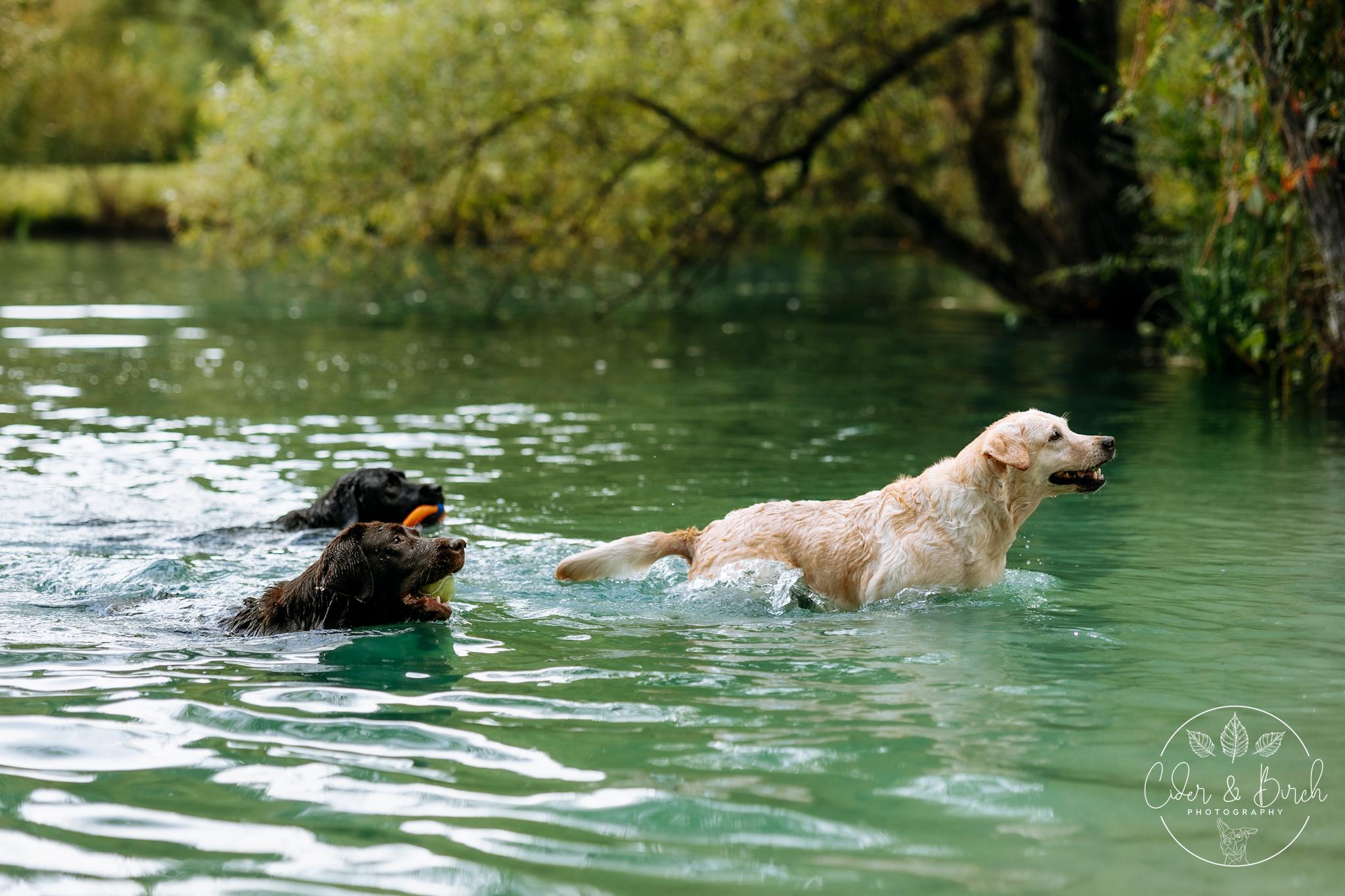
Look for shallow, calm water with no strong currents, steep drop-offs, or heavy boat traffic.
Barkwells’ dog-friendly ponds are perfect for beginners, with gentle slopes and plenty of room to play.
3. Gear Up if Needed
Some dogs (especially smaller breeds or pups with heavy builds) may feel more confident with a life jacket.
Why use a doggy life vest?
-
It adds buoyancy and helps them float while they learn.
-
Many come with handles, so you can guide or lift your pup if needed.
How to Find the Right Life Jacket for Your Dog
4. Use Toys and Treats as Motivation
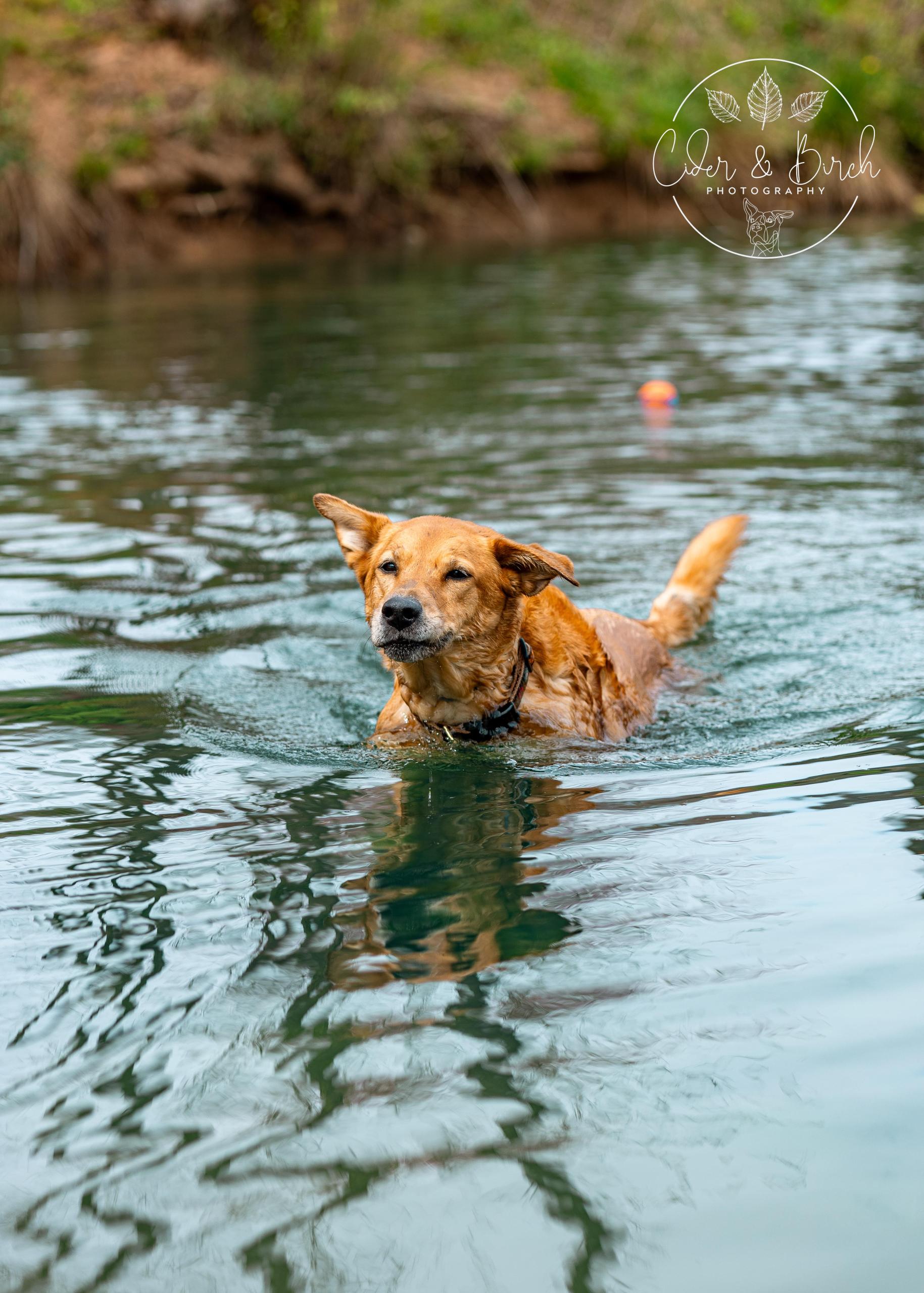
If your dog loves fetch, floating toys can be a great way to encourage them to wade deeper and try swimming.
Pro tip: Start by tossing the toy just a little farther each time. Pair it with plenty of praise and some tasty rewards.
Best Water Toys for Dogs – The Spruce Pets
5. Stay Close
Wade in with your dog! Being near you provides reassurance and allows you to guide them physically if needed.
Watch for signs of stress like frantic paddling, whining, or trying to get back to shore quickly. If that happens, back up a step and let them try again later.
Understanding Dog Body Language – PetM
6. Keep It Short and Sweet
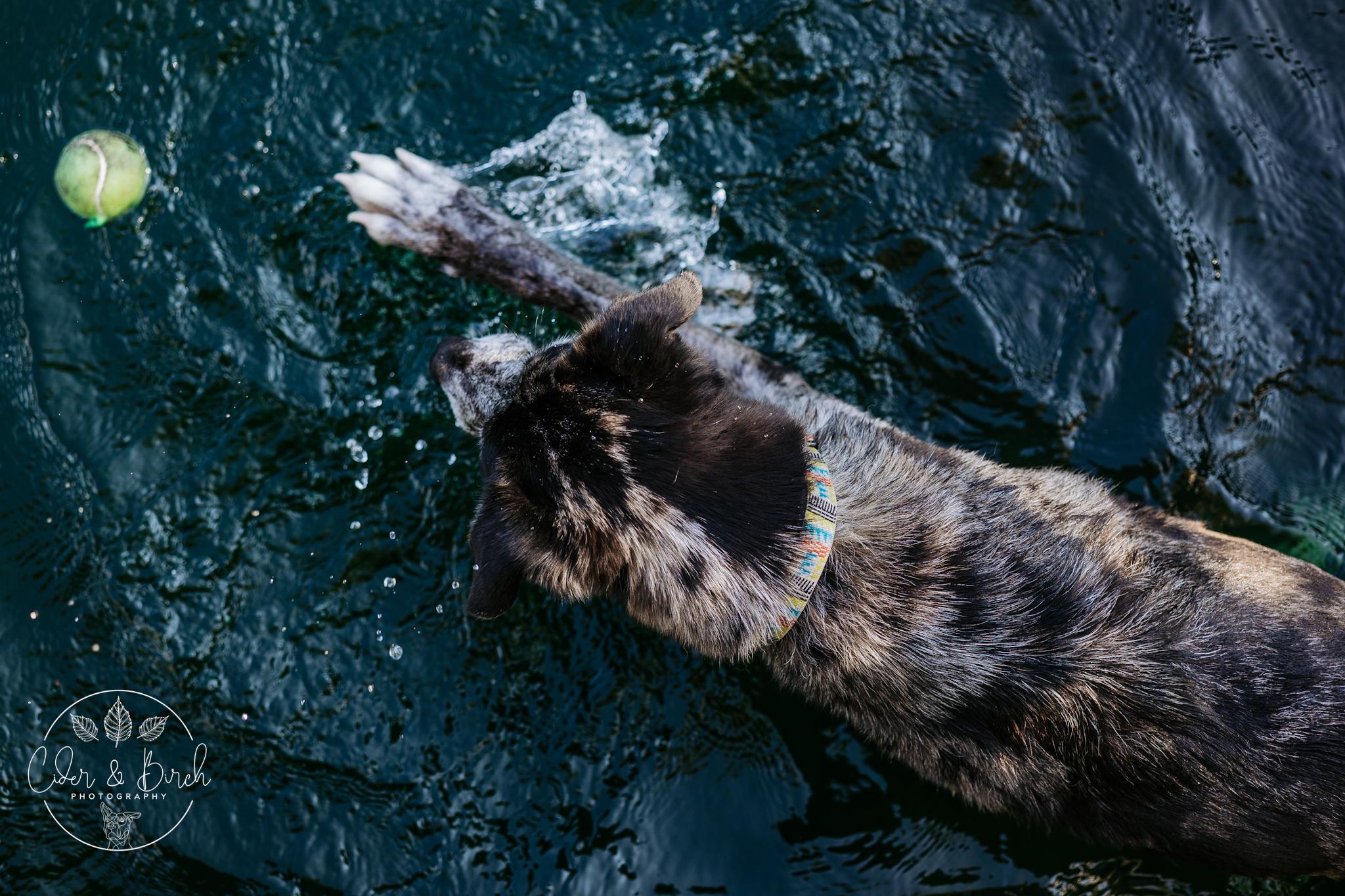
Swimming is hard work—especially for beginners! Start with short sessions, give your dog breaks, and always provide fresh drinking water nearby.
Heat & Hydration Safety Tips – ASPCA
7. Dry Off and Celebrate
Once your dog’s swimming adventure is done, dry them off to prevent chills or skin irritation. Then shower them with praise (and maybe a treat or two) to make it a positive memory!
How to Pool-Proof Your Dog's Coat– American Kennel Club
A Few Final Tips:
-
Not all dogs love to swim. That’s okay! Some prefer to splash around or stay on shore.
-
Always supervise. Even experienced swimmers can tire quickly or get into trouble in unfamiliar water.
-
Rinse off after swimming. Whether it’s in a pond, lake, or pool, it’s a good idea to rinse off dirt, chlorine, or other debris from your pup’s coat.
At Barkwells, we believe every pup deserves a safe and joyful water experience. With a little patience and encouragement, your dog can learn to swim—and maybe even become your favorite lake day companion!
Have fun and happy splashing!
