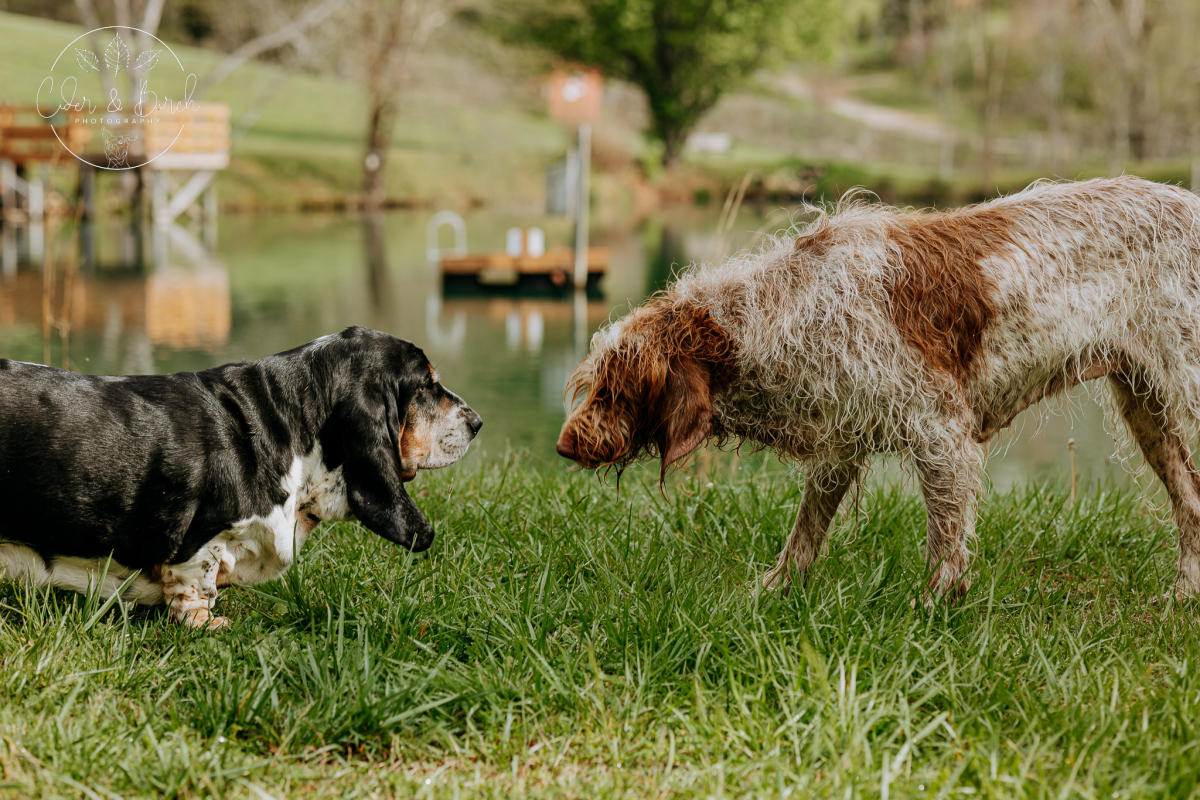
positive social experiences. Whether you have a playful puppy or a more reserved dog, proper socialization is key to their overall happiness and behavior.
Here are some tried-and-true tips for helping your dog thrive in social settings:
1. Start Early, But Remember It’s Never Too Late
If you’ve got a puppy, you’re in a great spot—puppies go through a critical socialization window between 3–14 weeks old. During this time, positive experiences with new people, pets, places, and sounds help shape their temperament for life.
But even adult dogs can benefit from careful socialization! You’ll just want to take it slow and ensure each experience is positive and low-pressure. Here’s a quick guide to socialization in each stage of your dog’s life from the Animal Humane Society.
Check out the AKC’s Guide to Puppy Socialization for more helpful tips!

2. Use Controlled Environments
Start with quiet, low-stress situations where your dog can observe from a distance before interacting. Gradually build up to busier settings. For example, let your dog watch other dogs play at a dog park before joining in, or set up playdates with a calm, well-socialized pup.
Auntie M’s Pet Care in Asheville offers dog training services for a variety of dog behaviors to help improve both your pup’s life and your own!
Saige’s Way Dog Training has tons of informative and easy to follow videos on different socialization activities and how to positively reinforce new experiences with your dog!

3. Read Body Language
Understanding dog body language is essential. Watch for signs of stress like tucked tails, yawning, lip licking, or turning away. If your pup seems overwhelmed, give them space and try again another time. Celebrate small wins and progress!
The RSPCA Dog Body Language Guide is a great starting reference to better understand what signs to look for in your dog’s movements and actions.

4. Use Positive Reinforcement
Always reward calm, curious behavior with treats, praise, or play. This helps your dog associate new experiences with positive outcomes. Avoid forcing interactions, which can create fear rather than confidence.
To learn more about the science behind positive reinforcement, check out this AKC article.

5. Expose Them to Variety
Introduce your dog to different types of people, sounds, places, and animals. That might mean going for a walk in a new neighborhood, visiting a pet-friendly patio, or playing with dogs of different sizes and temperaments.
Here are some more tips for socializing adult dogs.

The Barkwells Advantage
Because our cabins are designed with dogs in mind—from secure fencing to large, open play spaces and dog-loving neighbors—Barkwells is the perfect setting to encourage healthy, joyful dog interactions.
Whether you're vacationing with your pup(s), planning a reunion with other dog families, or just want to spend time around dogs; your time here can double as a fun social experience for your furry friend. We’ve seen shy dogs come out of their shell after a few days of sunshine, gentle introductions, and positive playtime with other pups.
Like us, every dog is different—some are social butterflies, and others are happy with a few trusted friends. Respect your dog’s personality and boundaries, and celebrate each step forward. With time, patience, and encouragement, you’ll help your dog feel more confident and connected.
Ready for some fun and friendly dog socialization? Book your stay at Barkwells today!
