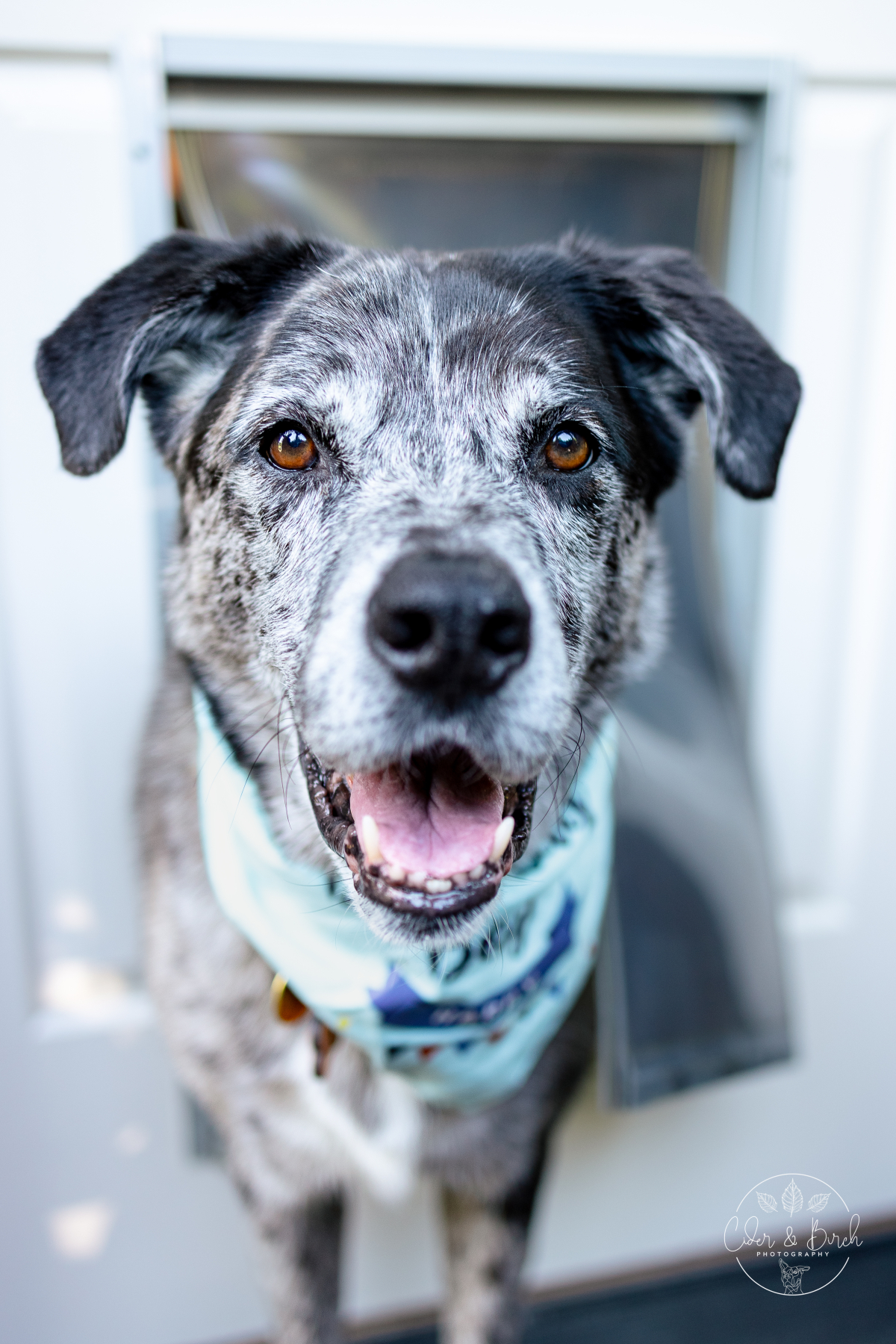
The good news? With patience, treats, and a little consistency, most dogs take to their dog door within just a few days.
Here's how to make the process smooth and even fun for both of you.
Before You Start: Size Matters
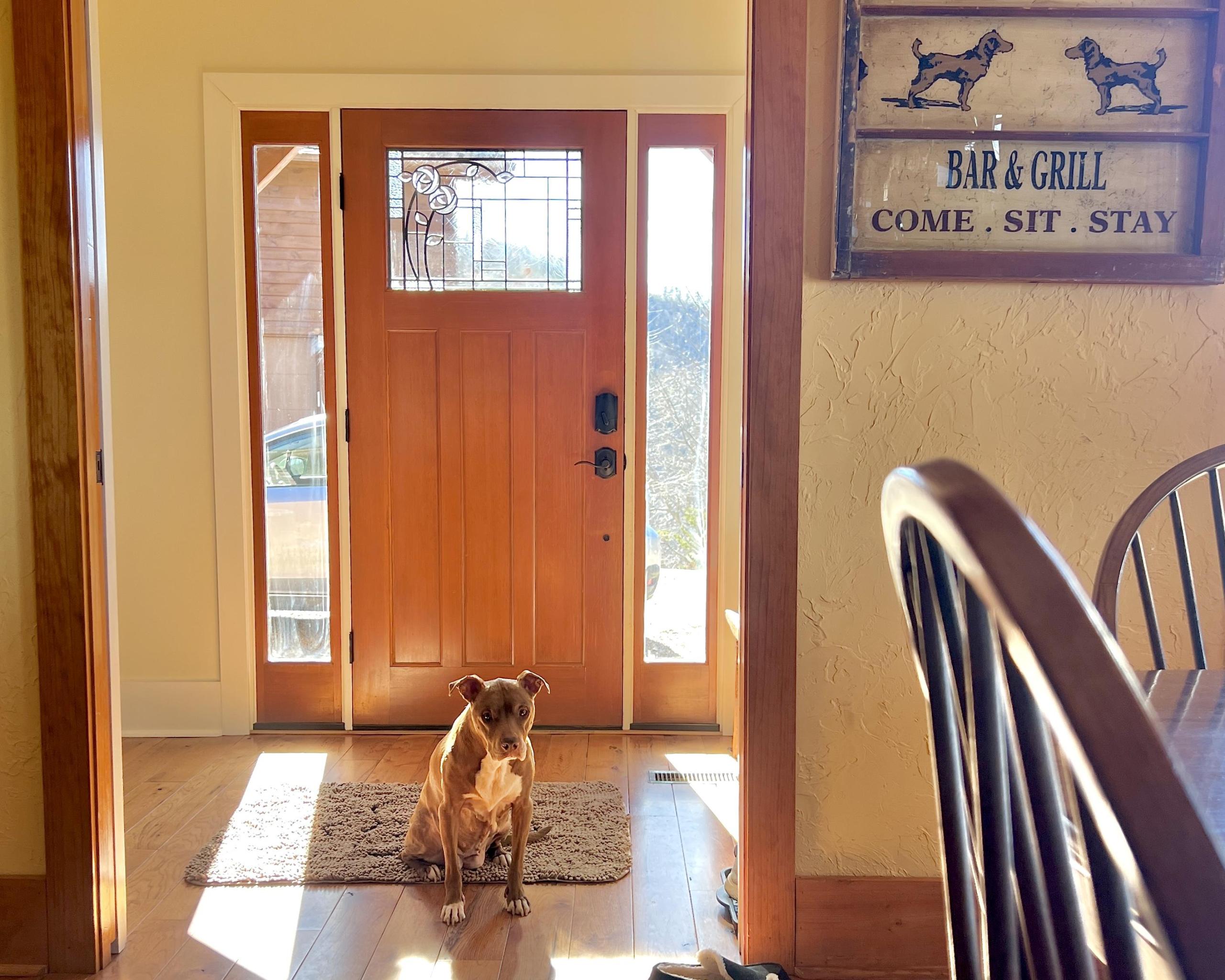
Before a single training session, make sure the door is the right fit. According to the American Kennel Club, a dog door that’s too small can be frightening, or even dangerous if your dog gets stuck. A good rule of thumb: the top of the door opening should be at least 1 inch higher than the tallest point of your dog’s back. If you have multiple dogs of different sizes, size up for your largest dog.
The type of dog door you get matters as well. Electronic dog doors that unlock via microchip are great for security, but require an extra layer of desensitization. The motor sound can startle dogs. Stick to a manual flap door when starting out if your dog is on the sensitive side.
Step-by-Step: Training Your Dog to Use the Flap
The key to success is breaking the process into small, rewarding steps. Never push your dog through the door or scold them for hesitating—only positive associations will get you there. Hill’s Pet Nutrition recommends making the whole thing feel like a game, ideally with a second person to help.
-
Introduce the door with no pressure. Let your dog sniff and investigate the door opening freely. Don’t attach the flap yet, just let them get comfortable with the new hole in the wall.
-
Lure them through the opening. Have one person on each side of the door. The person outside shows a high-value treat through the opening and calls your dog’s name cheerfully. When they come through, big praise and a reward.
-
Practice both directions. Once your dog is happily going one way, repeat the same steps going the other way. The door works both ways, and so should their confidence.
-
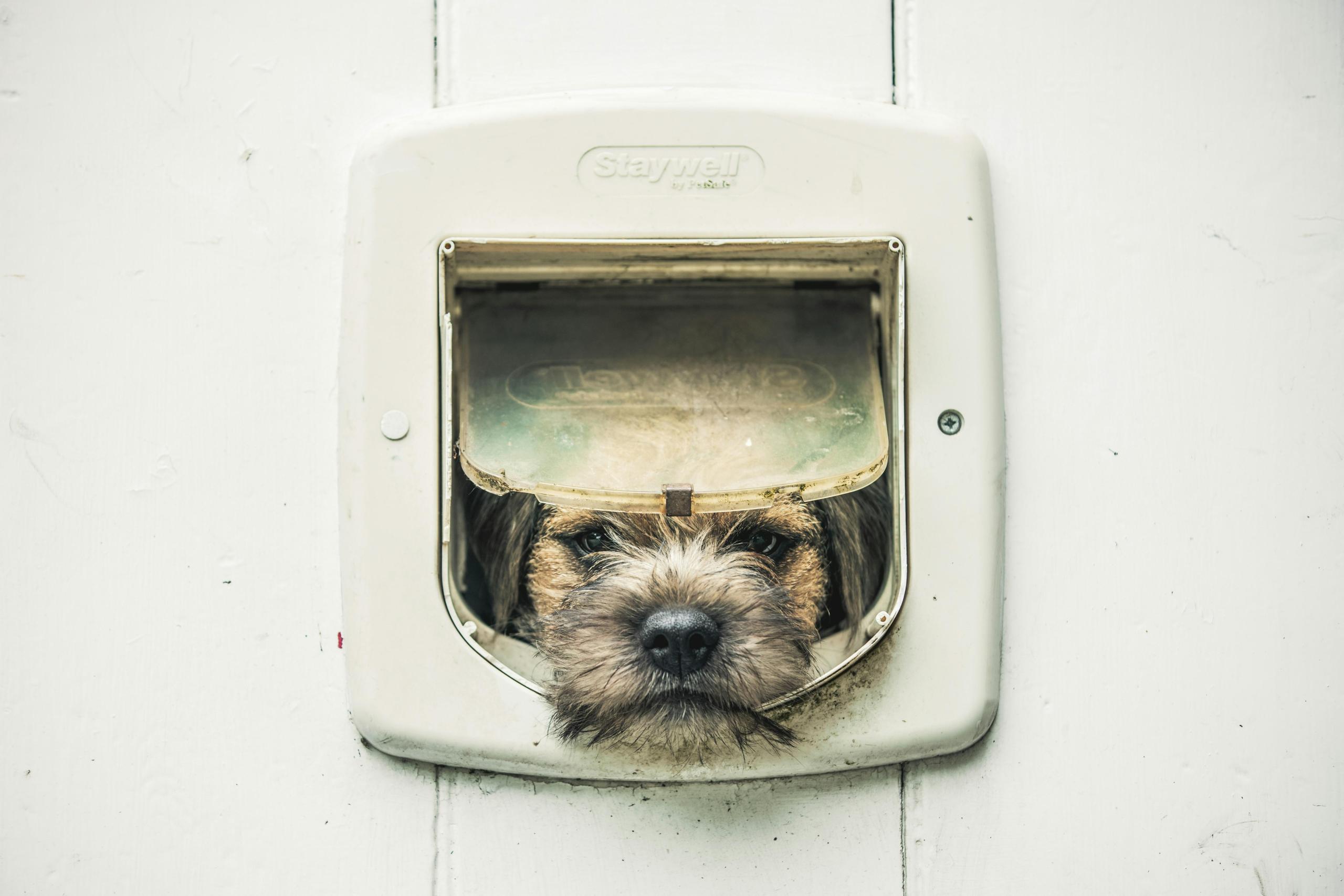
Add the flap gradually. Prop the flap partially open. Let your dog push through with minimal resistance. Lower it a little more each session, always rewarding success with treats and enthusiasm.
-
Let them push through independently. Once your dog is comfortable with the flap touching their back, step back. Toss a treat to the other side and let them go through on their own. This is the breakthrough moment.
-
Fade the treats. As your dog gains confidence, the freedom the door provides becomes its own reward. Gradually reduce treat frequency while keeping up the verbal praise.
According to Neater Pets, it’s also essential to have a solid “come” command before relying on a dog door so you can call your dog back inside whenever needed. If your pup hasn’t mastered this yet, take some time to work on it before training begins, especially if you have an unfenced yard.
What If My Dog is Scared?
Some dogs are naturally more cautious, and that’s completely okay. PetDoors.com recommends keeping each training session to about 10 minutes—long enough to make progress, short enough to keep it positive. If the flap itself is the problem, consider a training flap (one with slits instead of a solid panel) to ease the transition. You can also temporarily remove the door magnets to make the flap lighter and easier to push.
Reminder: Never force your dog through the door. Forcing creates fear, and fear creates a dog that avoids the door entirely. Every successful step, even just sniffing it, is worth celebrating.
Safety First: Dog-Proofing Your Yard
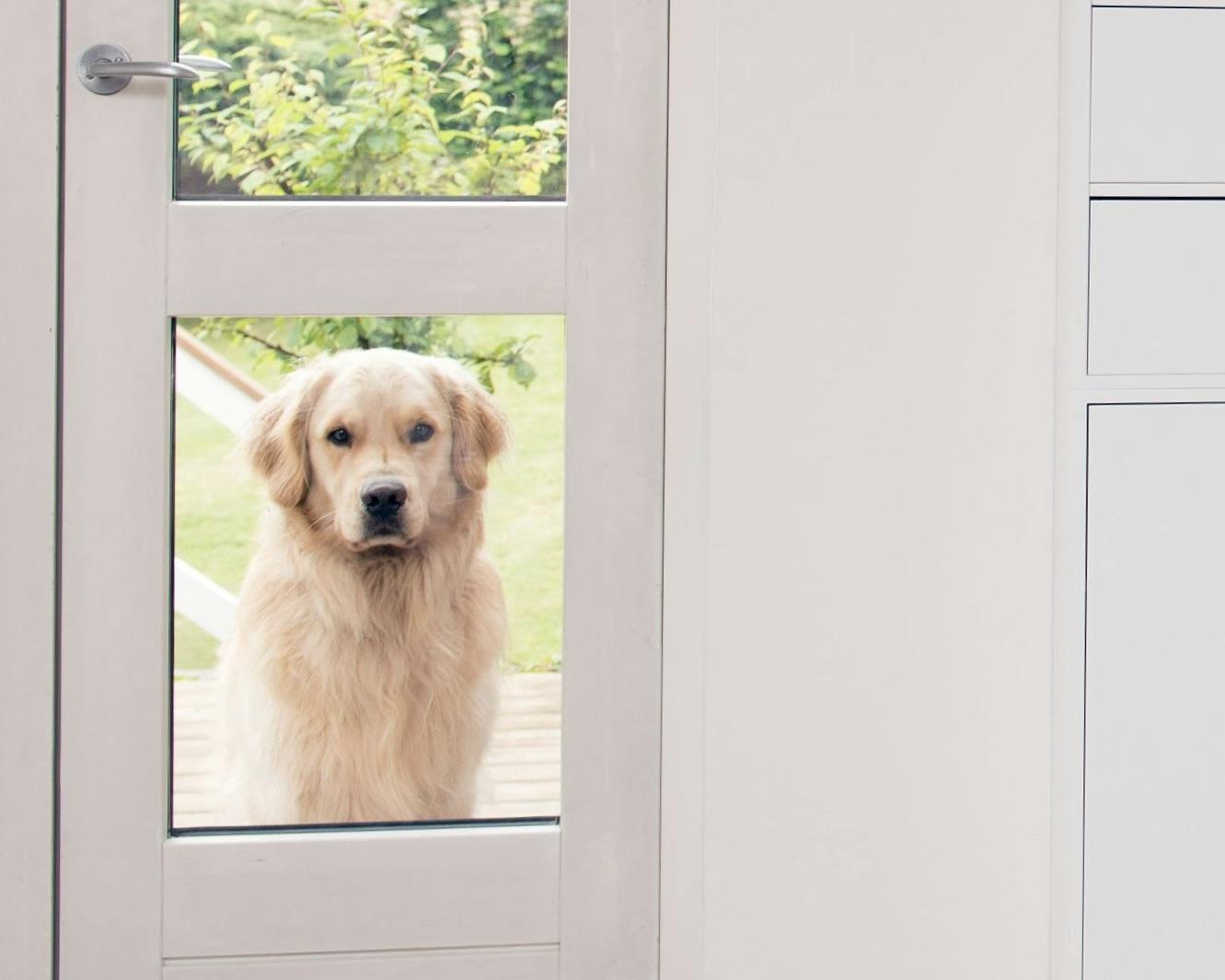
Once your dog is using the door independently, make sure the area they access is safe. The AKC advises that any dog with unsupervised outdoor access should be in a securely fenced yard (one they can’t jump over or dig under) with fresh water and a shaded spot available. Even well-trained dogs are vulnerable to wildlife, extreme temperatures, and strangers when left outside alone.
A Note on Older Dogs
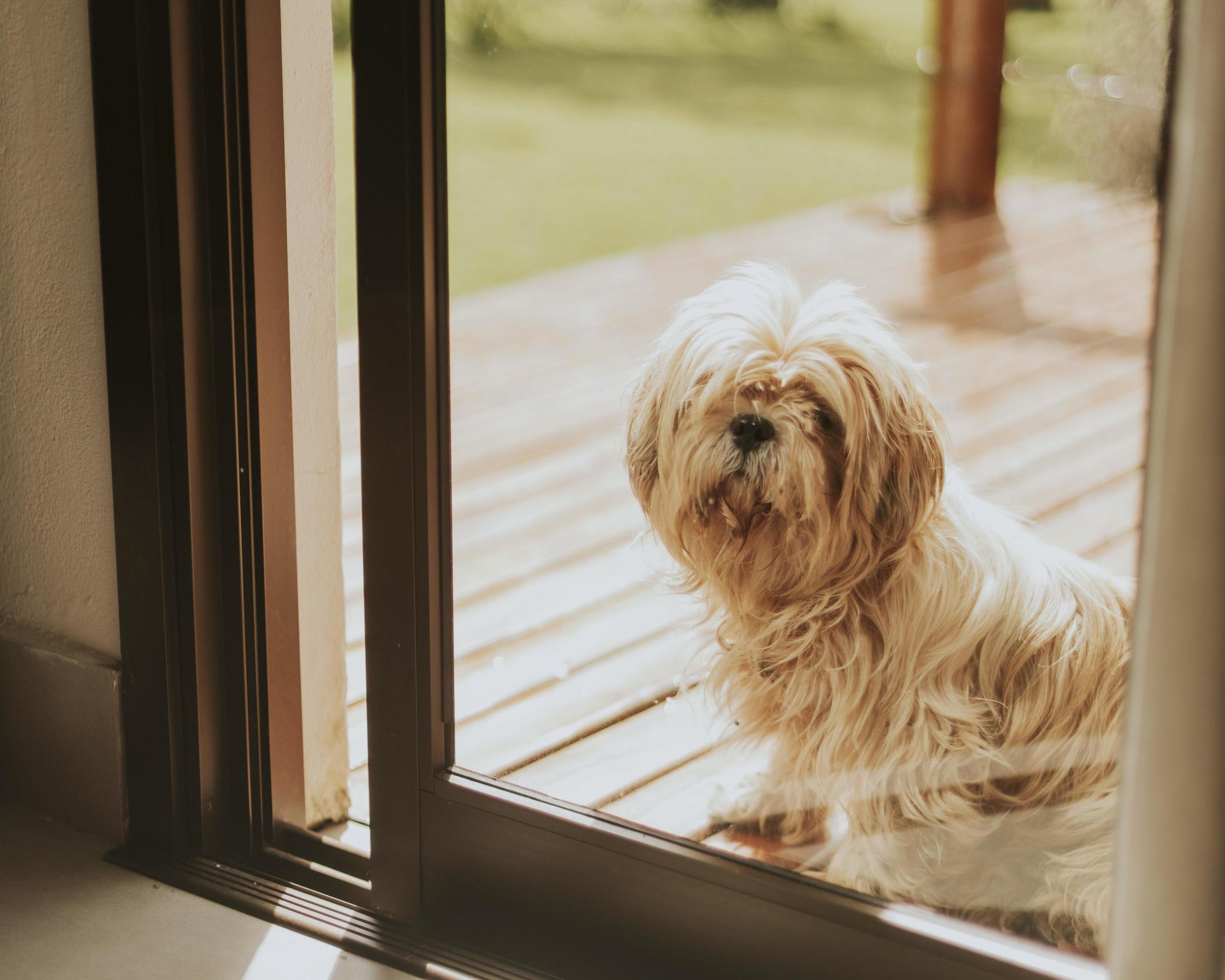
Training an older dog to use a dog door uses the same methods as training a puppy, it may just take a bit more patience. Senior dogs can be more set in their habits and more hesitant about new things, but with consistent, gentle encouragement they absolutely can learn. Hale Pet Door puts it well: some dogs take days, others take a week or more, and that’s perfectly normal.
Dog Doors and Stays at Barkwells
Barkwells is a dog-centric vacation retreat nestled in the Blue Ridge Mountains near Asheville and Brevard, North Carolina. Unlike “pet-friendly” hotels that merely tolerate dogs, Barkwells was built entirely around them. The fully fenced and gated property features acres of open meadows, a swimming pond, and cozy, fully-equipped cabins—each with its own private fenced yard, gated porch, and yes, an XL dog door. Your dog can come and go as they please in their own private yard, then splash in the pond, make new four-legged friends, and live their absolute best life with you by their side! And while they’re utilizing their new dog door skills, you soak in the hot tub and breathe in mountain air.
It’s not just a place to stay—it’s the vacation you and your dog both deserve. Come. Sit. Stay.
